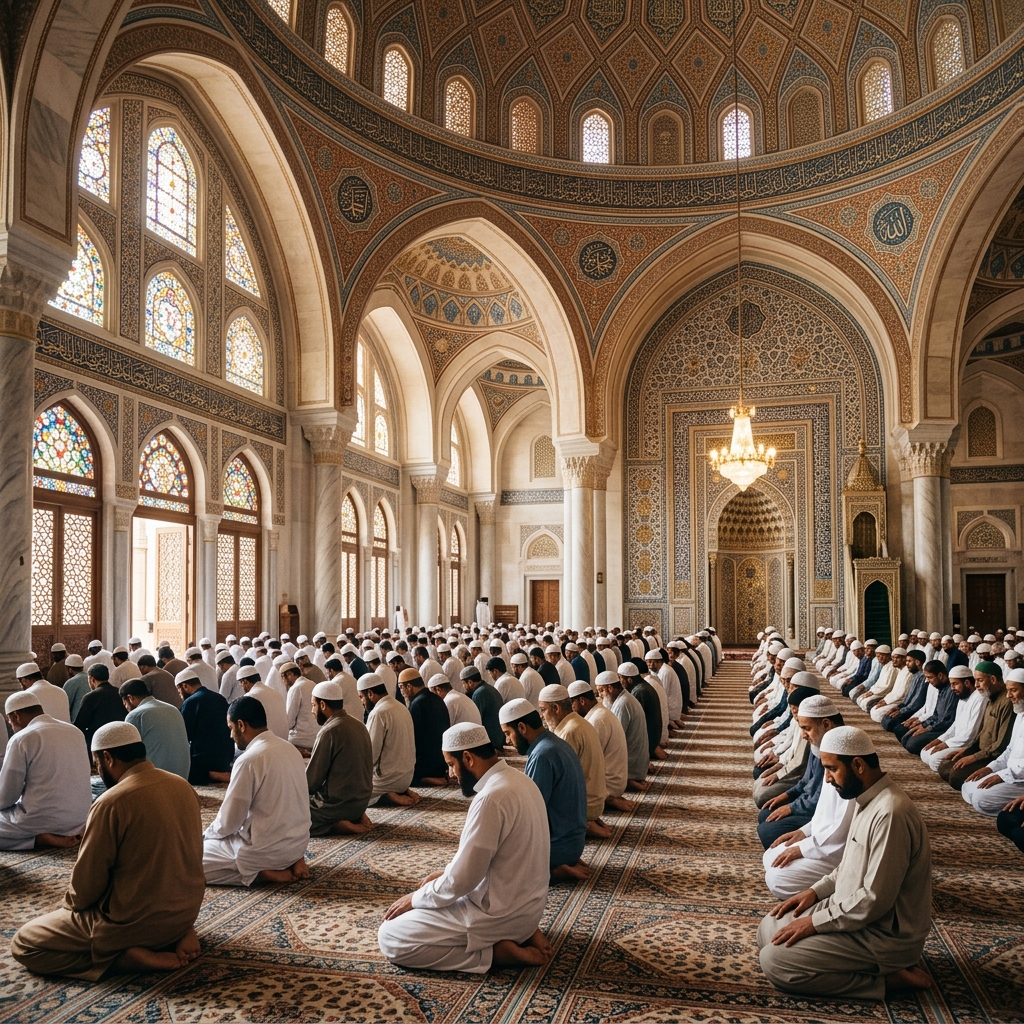
The Religious Obligation of On-Time Prayer
In Islamic jurisprudence (Fiqh), each of the five daily prayers has a prescribed time window. Performing Salah before its time begins or after its window ends without a valid reason is considered a sin by most scholars. This places enormous importance on having access to precise, mathematically sound prayer timings.
Fajr is particularly critical. It must be performed between the break of true dawn (astronomical twilight) and sunrise. In Bahrain, that window can be as short as 60–90 minutes. If a person uses inaccurate timings and prays even 5 minutes before the actual Fajr begins, their prayer may be invalid.
Maghrib Accuracy During Fasting
Maghrib must be performed immediately after sunset. During Ramadan fasting, beginning Iftar even one minute early is impermissible. This is why families across Bahrain — from Manama to Zallaq — depend on trusted, scientifically calculated prayer times every single day.
Static prayer time tables printed in local newspapers or shared on social media are often rounded to the nearest 5 minutes, which introduces an inherent margin of error. Dynamically calculated prayer times for each specific city eliminate this risk entirely.
Cultural and Social Impact of Prayer Timings in Bahrain
From a cultural perspective, prayer times in Bahrain structure the entire society's schedule. Business meetings are planned around Dhuhr and Asr. Restaurants in malls across Hamad Town and Isa Town pause service during prayer times. Schools and government offices coordinate breaks around the adhan.
This cultural embedding of prayer into institutional life means that an accurate prayer time is not merely personal — it is a civic necessity that keeps Bahraini social life running in harmony with Islamic principles.
Health and Wellness Benefits of Regular Salah
From a health perspective, the fixed rhythms of prayer — five times a day with defined physical postures — provide consistent mindfulness and light movement. Research in Islamic medical journals has found correlations between regular Salah practice and reduced stress, improved posture, and greater mental focus.
The physical act of Salah — standing, bowing (Ruku), prostrating (Sujood) — when performed five times daily, contributes to joint flexibility, core strength, and cardiovascular health. Accurate prayer times make it possible to maintain this discipline consistently.